From structural engineering to intelligent flight control — how we built a drone designed to carry real firefighting impact.
When Payload Becomes the Mission
Most drone platforms are built for cameras.
VATROGON’s heavy drone platform was built for impact.
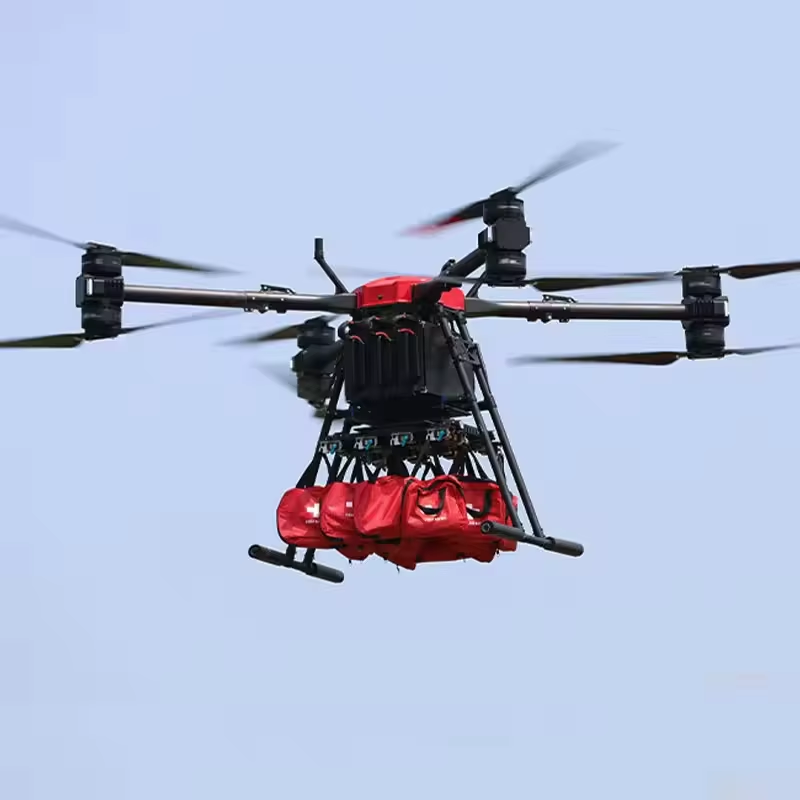
The mission: Carry 30–50+ kg fire suppression payloads safely, precisely, and repeatedly — in rugged wildfire terrain.
Design Philosophy: Stability Under Load
Heavy-lift firefighting drones face three core engineering challenges:
Structural stress under dynamic payload shift
Center-of-gravity control
Thermal exposure near active fire zones
Our R&D team approached the platform as a flying industrial machine, not a consumer drone.
Frame & Structural Architecture
We adopted:
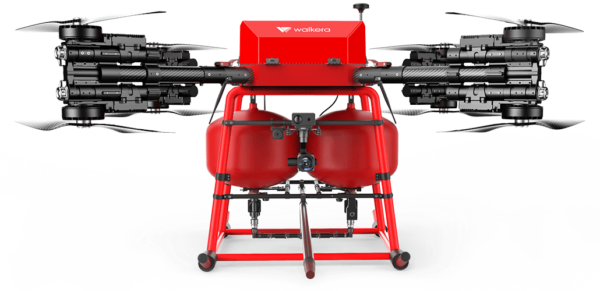
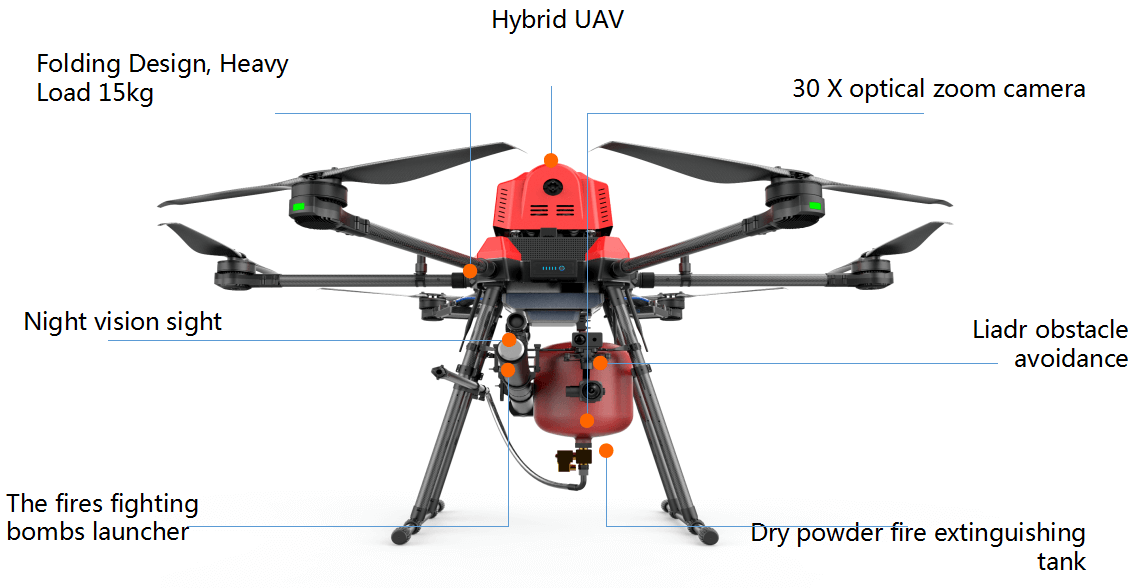
High-strength carbon composite arms
Reinforced central payload bay
Modular landing gear for uneven terrain
Vibration-dampened bomb-release interface
Finite element stress simulations were conducted to test:
Rapid ascent under full load
Emergency motor failure scenarios
Asymmetric payload dynamics
The result:
A stable octocopter configuration capable of controlled hover and vertical precision release.
Ergonomics & Field Deployment
Firefighting operators work in extreme conditions.
So we engineered:
Tool-free payload attachment
Quick-release safety mechanisms
Color-coded mechanical locks
Foldable arms for vehicle transport
Ruggedized electronics enclosure
Setup time in field conditions: Under 10 minutes from transport to takeoff readiness.
"I've been on several tours with Outdoor, and each one has left me feeling rejuvenated and inspired. The attention to detail and the seamless organization make them my go-to choice for outdoor adventures."
Samantha Carsin
lovely Tourist
Flight Control Intelligence
Heavy drones require advanced control logic.
Our flight system integrates:
Real-time payload mass detection
Dynamic thrust compensation
Wind-adaptive stabilization
Precision detonation altitude calculation
Redundant power distribution
The aircraft does not simply drop payloads.
It calculates trajectory, altitude, and optimal dispersion geometry.
Operational Impact
Heavy-lift UAVs enable:
🔥 Rapid response to remote ignition 🏔 Access to dangerous terrain 🌙 Night-time deployment (unlike helicopters) ⚡ Lower cost compared to manned aircraft 🎯 Targeted suppression with minimal collateral damage