Turning scientific experimentation into operational wildfire response through data-driven UAV fire suppression systems.
Wildfires near critical infrastructure — particularly high-voltage transmission corridors — represent one of the most complex fire response environments. Remote terrain, difficult access routes, and proximity to energized lines make traditional suppression both risky and expensive. Helicopter deployment, while effective, is costly, limited during peak seasons, and often unsuitable for night operations.
This operational challenge led to a fundamental R&D question:
Can UAVs safely deploy fire-extinguishing bombs with measurable, repeatable efficiency?
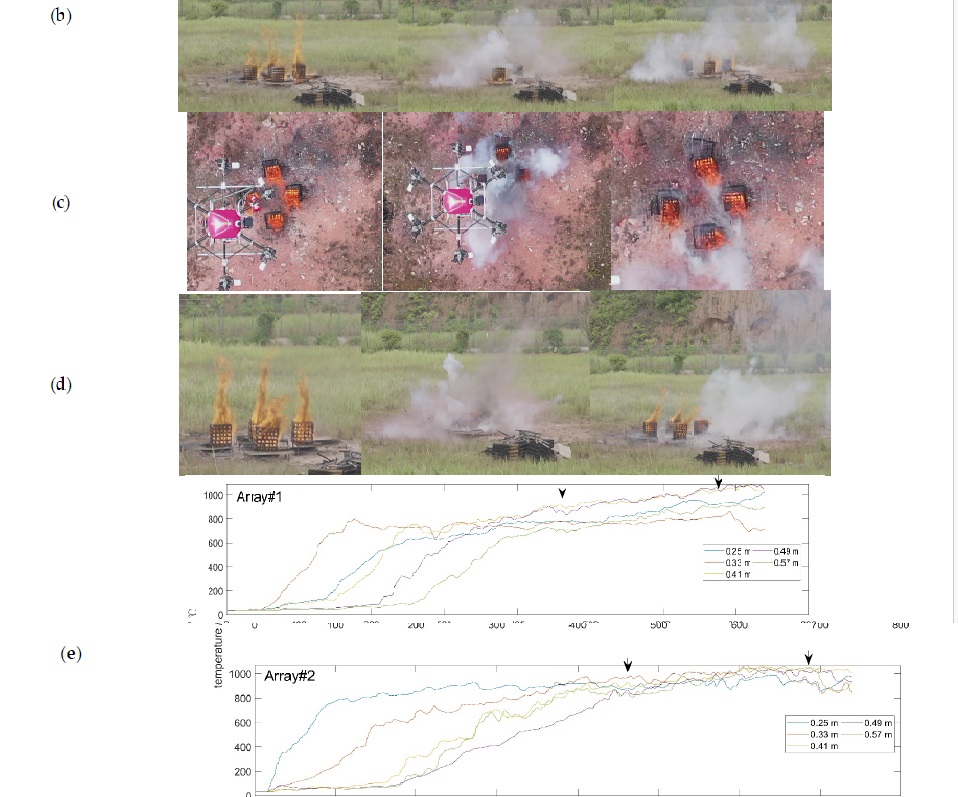
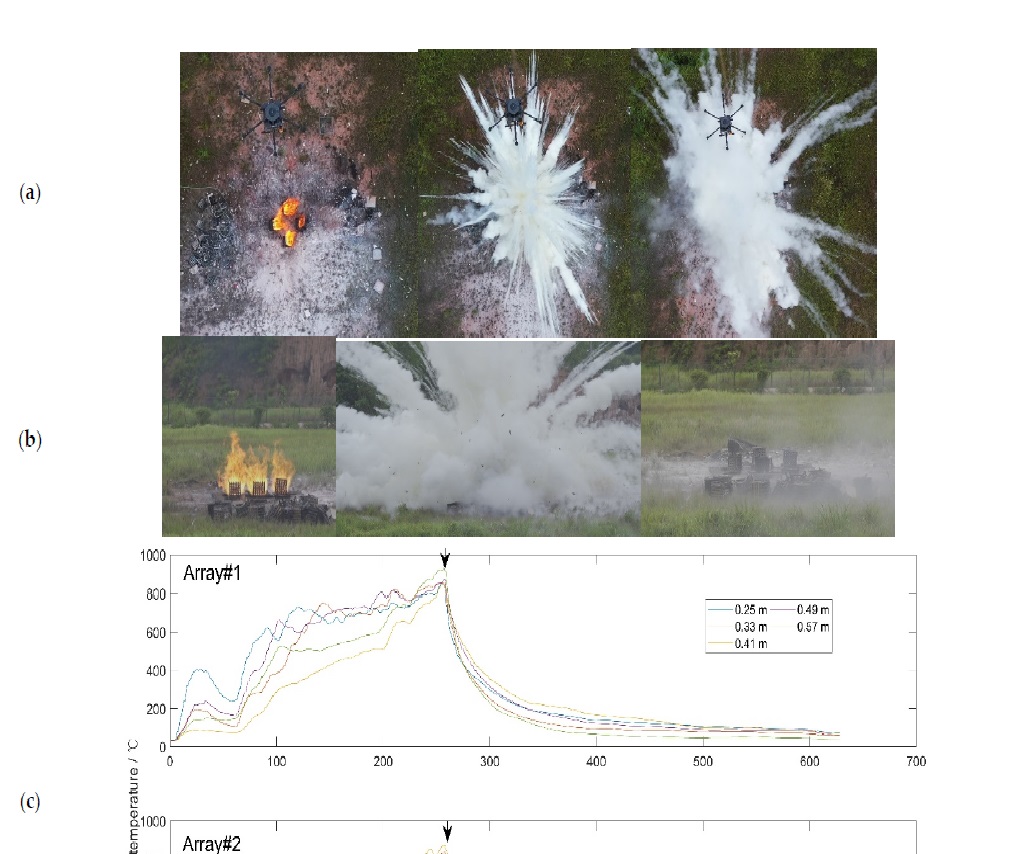
To answer this, controlled testing was conducted using UAV-released fire-extinguishing bombs under standardized fire conditions. Multiple payload configurations ranging from 5 kg to 50 kg were evaluated, comparing both water-based and dry powder agents. The goal was not only to extinguish fire, but to understand dispersion behavior, temperature reduction, coverage geometry, and re-ignition risk.
Initial trials revealed important distinctions between payload classes.
Smaller payloads in the 5–20 kg range produced measurable cooling effects, but lacked sufficient dispersion and penetration to suppress multiple ignition points simultaneously. They reduced flame intensity, yet could not guarantee full extinguishment in denser fuel conditions.
Clear performance improvements were observed with heavier dry powder configurations.
"I've been on several tours with Outdoor, and each one has left me feeling rejuvenated and inspired. The attention to detail and the seamless organization make them my go-to choice for outdoor adventures."
Samantha Carsin
lovely Tourist
Key R&D Findings
30 kg and 50 kg dry powder payloads successfully extinguished multi-point fire scenarios in a single deployment.
Significant temperature drops were recorded, with no re-ignition observed after suppression.
50 kg water-based payloads demonstrated strong localized cooling but limited multi-point suppression capability due to smaller dispersion area.
The physics behind this distinction is critical. Dry powder agents disperse with higher initial expansion velocity and broader coverage geometry, creating a suppression cloud capable of covering larger surface areas. Water-based agents, while effective at point-of-impact cooling, exhibit more limited horizontal spread.
These insights are not theoretical. In March 2024, heavy-lift UAVs equipped with 30 kg and 50 kg fire-extinguishing bombs were deployed in a real wildfire event threatening a 500 kV transmission corridor. Multiple payloads were released in coordinated sequence, successfully suppressing the fire near the infrastructure — without helicopter involvement.
This real-world validation confirmed three critical operational advantages:
Rapid response in difficult terrain
Reduced dependency on manned aviation
Enhanced safety for firefighting personnel
For VATROGON, these findings directly influence our system architecture and mission planning models. Payload selection, detonation altitude calibration, and diffusion modeling are not abstract engineering variables — they are mission-critical parameters.
Strategic R&D Direction
Our ongoing development focuses on:
Optimizing release altitude and dispersion geometry
Coordinated multi-drone suppression strategies
AI-assisted ignition mapping for targeted deployment
Increased payload capacity beyond current 50 kg class
As UAV lift capability advances, the integration of larger suppression payloads will require continued aerodynamic and fire-behavior modeling. The objective is not simply to scale payload mass, but to maximize suppression efficiency per deployment cycle.
Wildfire response is transitioning from reactive suppression to precision aerial intervention. Through structured testing, engineering refinement, and operational validation, UAV-deployed fire-extinguishing systems are becoming a scalable tool for infrastructure protection and advanced wildfire management.